Skip to content
Play
Play
Primary Navigation Menu
Menu
  • Home
  • Resources
    • Coding
    • Educational Robotics
    • Making
    • Tinkering
    • Games
  • Educational Path
  • Blog
  • English
    • English
    • Français
    • Italiano
    • Deutsch

for educators

Hands-on

Looking for Darkness
2026-04-16
By Rachele Toniolo
On 16 April 2026

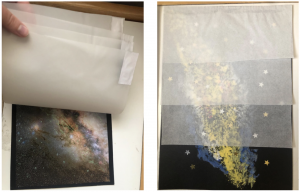
Teaching Activity designed by Irene Salmaso and Erika Korb during the doctorate course “Designing multi-sensory public engagement activities”, held at the University of Padova in 2025. Short description of the activity This lab is aimed at raising awareness on causes and effects of the progressive disappearance of darkness in our sky. Participants will discover that the increase of artificial light produces negative effects both upon Astronomy and the ecosystems. The activity will start with a journey from the city centre to the Atacama desert, during which participants will be ableLEGGI TUTTO

Coding - Making

How to discover new planets with the method of transits

2021-10-11
By Federico Di Giacomo
On 11 October 2021

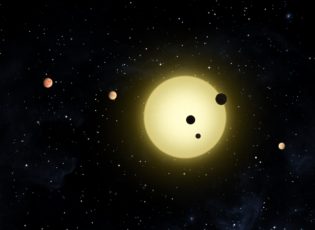
In 1995 two astronomers, Michael Mayor and Didier Queloz, detected around the star 51 Pegasi the first extrasolar planet, 51 Pegasi b. This is a giant gaseous planet, with dimensions similar to Jupiter, orbiting around a Sun-like star. Sofar, almost 4000 extrasolar planet have been discovered, and their number is costantly increasing. The refinement of observational methods and the development of space missions make the search for exoplanets – in particular of those which might have suitable conditions for hosting forms of life – one of the most exciting topics of astronomy. Most extrasolar planest weLEGGI TUTTO

PLAY INAF

By the INAF innovative teaching group. Translations into English, French, and German are by Giuliana Giobbi.

PLAY INAF sui social

Designed using Chromatic Premium. Powered by WordPress.